




Ask two people with lower back pain what helps and you'll get two different answers. One swears by a brisk daily walk; the other by slow lengths at the local pool. Both are onto something. Walking and swimming are the two activities most often recommended for an aching back, because each gets the spine moving without the jarring load of running or the twisting demands of many team sports. They are not interchangeable, though. Each suits different pain patterns, different fitness levels and different stages of recovery — and one of them is usually easier to start this week than the other.
Why movement helps a sore back more than rest
Most episodes of lower back pain are not caused by something being "out of place". They involve irritated joints, tight or weak supporting muscles, and sometimes a disc that is grumpy rather than damaged. Discs have almost no blood supply of their own; they take in nutrients when the spine moves and pressure shifts from one segment to another. That is a large part of why prolonged bed rest tends to leave a bad back feeling stiffer, not better.
Walking and swimming both deliver that gentle, rhythmic movement. Neither is a cure, and neither replaces an assessment if your pain is severe, spreading down a leg, or comes with numbness or weakness. But for the common, nagging, non-specific kind of back pain, regular low-impact activity is one of the most reliable things you can do — provided you build up sensibly.
Walking: weight-bearing, familiar, easy to fit in
Walking keeps you upright, so your spine stays loaded in a way it recognises. The deep muscles that support the lower back get steady, low-level work, and your hips, pelvic floor and feet join in — foot health matters more to back comfort than most people realise. It costs nothing, needs no equipment beyond a decent pair of shoes, and can be split into ten-minute chunks if a long walk feels daunting.
Where walking can fall short is load. Because you are carrying your own body weight, a long walk on hard ground can leave an irritated back feeling worse, particularly if you are carrying extra weight, hauling a heavy bag, or marching along cambered pavements. Shoes matter too: flat, worn-out trainers often show up as next-day pain.
Swimming and pool work: buoyant and forgiving
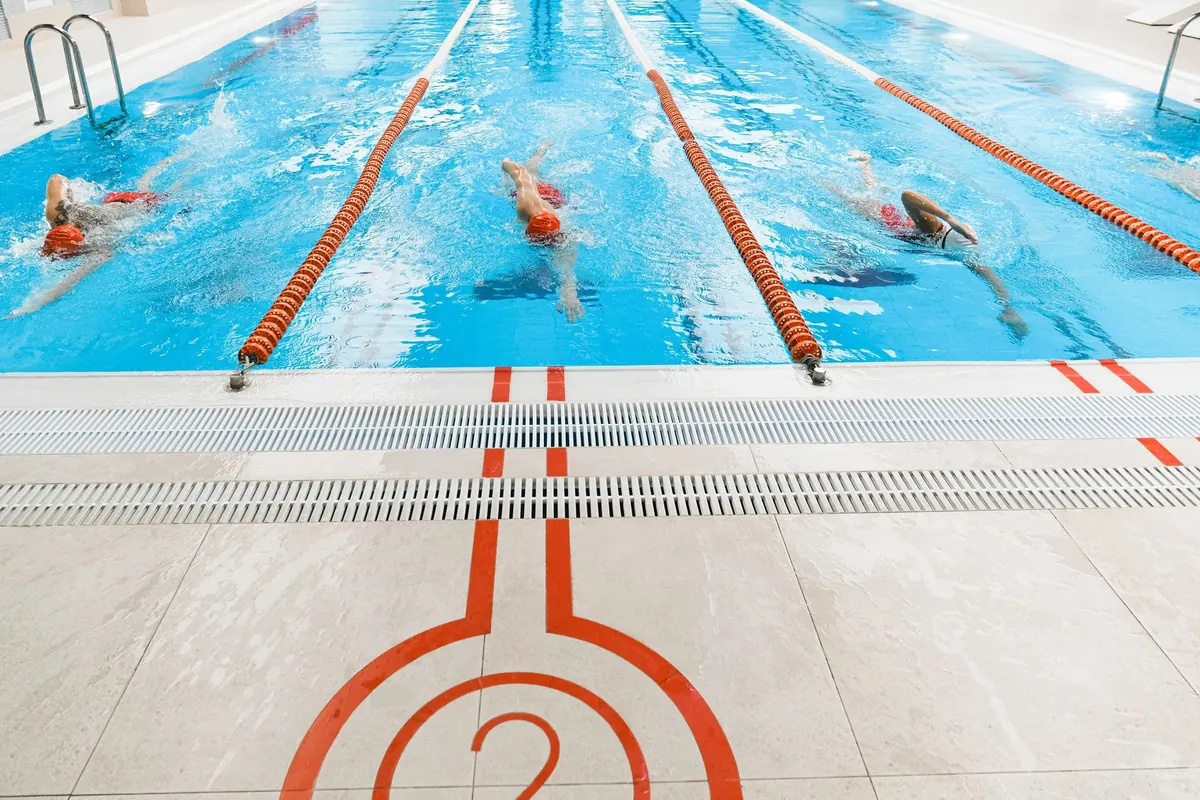
Water takes most of your body weight off your spine. In chest-deep water you are unloading a good portion of it; floating on your front or back, almost all of it. That makes the pool a sensible choice when walking is simply too painful, or in the early stage of recovery after a flare-up.
Not every stroke suits every back. Front crawl with a lot of head rotation and a powerful kick can aggravate some necks and lower backs, and breaststroke, with its arched lower back and frog kick, is a common culprit for people with facet joint pain. Backstroke and gentle, well-timed front crawl often sit better. Simple water walking, or slow leg lifts while holding the poolside, can be as useful as any stroke.
Cold water also makes muscles tense up at first, so a warmer pool — or a few minutes of easy movement before you start — is a kinder introduction.
Side by side: how the two compare
- Load on the spine: walking is weight-bearing and compresses the spine moderately; swimming and pool work unload it almost entirely.
- Muscles worked: walking strengthens legs, hips and feet in a standing posture. Swimming builds upper body and core strength, but asks less of the small stabilising muscles that support you when upright.
- Cardio effect: both raise your heart rate, though most people find it easier to get properly out of breath on a brisk walk.
- Access and cost: walking is free and starts at your front door. Swimming needs a pool, a journey and usually a session fee or membership.
- Bad-weather backup: the pool wins comfortably when pavements are icy or the evenings are dark.
- Risk of overdoing it: in water it is easy to do far more than you would on land without noticing, then pay for it the next morning.
Which one suits you?
Choose walking if your pain eases as you get going, if you feel better standing than sitting, and if you want something you can do daily without planning. It is usually the better long-term habit, because you can keep it up for decades and it slots around work and family life.
Choose the pool if walking flares your pain, if you are recovering from a recent episode, if arthritis in your hips or knees makes weight-bearing sore, or if you are carrying enough weight that walking feels like hard work. It is also a good option when a leg is sore enough that standing is difficult.
Use both if you can. Two or three short walks a week plus one or two pool sessions gives you the load-bearing benefits of walking and the decompression of water. If you are unsure which suits your back, a physiotherapist can watch how you move and give you a straight answer.
Building up without provoking a flare
- Start smaller than feels impressive. Ten minutes on flat ground, or fifteen in the pool, is a genuine starting point.
- Keep the first fortnight identical, then add a few minutes rather than a few kilometres.
- Walk at a pace where you can still hold a conversation.
- In the pool, begin with water walking and gentle leg swings; add strokes once you know how your back responds.
- Warm up for five minutes, and walk in the middle of the day if mornings are stiff.
- Stop short of sharp pain, and never push through tingling, numbness or weakness in a leg.
Judge a session by how your back feels the next morning, not by how far you went.
A sensible starting week
Pick one session and repeat it three times this week — a ten-minute walk after lunch, or fifteen minutes of water walking with a few easy lengths. Note how your back feels that evening and the following morning. If it is no worse, add two or three minutes next week. If it is worse, drop back to the previous level rather than stopping altogether.
Speak to a GP or physiotherapist before starting if your pain is severe, has lasted more than a few weeks, followed an injury, or comes with numbness around the groin or saddle area, changes to bladder or bowel control, or weakness in a leg. The same applies if you have had spinal surgery. For most other backs, the kindest thing is rarely the sofa — it is a short, regular dose of movement, on land or in water, that you can genuinely keep doing.
Photo: SHVETS production / Pexels